The Rise of the ‘Islamic NATO’: Pakistan, Saudi Arabia, Qatar, and Turkey’s Strategic Defense Bloc

The Pulse
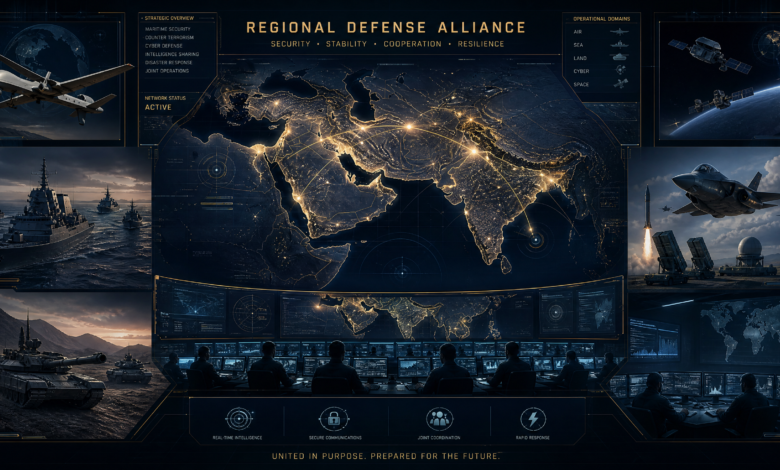
Pakistan, Saudi Arabia, Qatar, and Turkey are forging a new strategic defense bloc, informally dubbed the ‘Islamic NATO.’ This alliance aims to reshape security dynamics across the Muslim world amid rising regional tensions and global power shifts.
With shared geopolitical interests and expanding military cooperation, this coalition challenges traditional power structures and signals a recalibration in defense alignments spanning South Asia to the Middle East.
Core Significance
- Emerging Regional Powerhouse: The bloc represents a collective security mechanism among influential Islamic nations bridging South Asia and the Gulf.
- Geopolitical Realignment: Signals a shift away from Western-led security frameworks towards indigenous defense cooperation.
- Counterterrorism and Stability: Focuses on coordinated efforts to combat extremism and protect critical trade routes.
- Technological and Intelligence Sharing: Expands AI and defense tech collaboration enhancing military modernization.
- Economic and Diplomatic Impact: Could influence energy markets, investment flows, and diplomatic relations amid growing global uncertainties.
Deep Context
The concept of a unified defense alliance among Islamic countries is not entirely new; however, recent geopolitical developments have accelerated cooperation between Pakistan, Saudi Arabia, Qatar, and Turkey, forming what analysts colloquially term the ‘Islamic NATO.’
Historically, Pakistan has maintained strong military and strategic ties with Saudi Arabia, rooted in shared religious affiliations and mutual interests in regional security. Turkey’s growing regional ambitions and enhanced military capacities complement these alliances, while Qatar’s unique diplomatic positioning and economic resources further solidify the bloc’s framework.
These nations operate in volatile neighborhoods fraught with ongoing conflicts in Afghanistan, Yemen, Syria, and tensions in the Persian Gulf. Additionally, the global recalibration following US strategic pivot to Asia and reduced direct military presence in Middle Eastern theaters has created a security vacuum that this bloc aims to fill.
In the backdrop, the rivalries of Iran and Israel, alongside rising sectarian divides, have propelled these four countries to identify common security threats transcending ideological differences. Military exercises, arms deals, intelligence sharing, and joint counterterrorism initiatives have increased markedly since 2020.
Moreover, Pakistan’s dual role as a nuclear power and regional stabilizer gives the bloc strategic depth, while Turkey’s expertise in defense manufacturing and Qatar’s financial leverage provide complementary strengths.
Strategic Outlook
Looking ahead, the ‘Islamic NATO’ bloc is likely to deepen military collaboration, enhance interoperability of forces, and expand joint intelligence platforms, particularly integrating cutting-edge technologies such as AI-driven surveillance and cyber defense systems.
This coalition may also seek formal recognition or institutional frameworks to coordinate peacekeeping missions and humanitarian interventions across conflict zones in the Muslim world.
Potential challenges include balancing divergent political agendas, managing external pressures from Western and regional powers, and maintaining cohesion amid internal political fluctuations within member states.
Observers should monitor:
- Upcoming joint military drills and procurement agreements.
- Diplomatic alignments with global powers like China and Russia that could influence bloc strategies.
- Policy shifts in response to regional crises, including the Afghanistan aftermath and Persian Gulf tensions.
- Expansion prospects to include other Muslim-majority states, possibly enhancing strategic reach.
Data Insights
- Defense Spending: Saudi Arabia, Turkey, and Pakistan rank among the top 20 global military spenders. Pakistan’s defense budget in 2023 stood at approximately $11.5 billion (source: SIPRI).
- Military Exercises: The number of trilateral or quadrilateral joint military exercises increased by 40% from 2019 to 2023 (Reuters).
- Arms Trade: Saudi Arabia and Turkey accounted for 15% of Pakistan’s arms imports in 2022, highlighting enhanced defense procurement ties (Stockholm International Peace Research Institute – SIPRI).
- AI & Tech Collaboration: Turkey and Pakistan established a joint innovation center in 2022 focused on AI military applications and drone technology (Dawn).
- Trade Volume: The total trade volume between these countries exceeded $25 billion in 2023, demonstrating growing economic interdependence relevant to security cooperation (Economic Times).
Expert Nuance
Experts emphasize that while the ‘Islamic NATO’ label is media shorthand rather than a formal alliance, it encapsulates a genuine shift in defense dynamics. According to Dr. Ayesha Siddiqa, a defense analyst at Quaid-i-Azam University, “This bloc is less about replicating NATO’s command structure and more about pragmatic pooling of resources and strategic convergence driven by mutual interests rather than ideology.”
Security consultant Hamid Khan notes the soft power aspect: “Saudi Arabia and Qatar’s financial clout combined with Turkey’s defense industry growth create a unique ecosystem that challenges Western dominance in the region’s security architecture. Pakistan’s historical experience in counterinsurgency and nuclear deterrence adds a critical layer of credibility.”
On potential pitfalls, analysts caution that regional rivalries—especially between Iran and Saudi Arabia or intra-Gulf disputes—could strain cooperation. Moreover, Pakistan’s domestic political volatility and Turkey’s balancing act between NATO obligations and regional ambitions may test alliance resilience.
Finally, this bloc’s success will hinge on how effectively it can integrate AI and emerging defense technologies while navigating complex diplomatic relations, as highlighted in recent reports from Al Jazeera and Dawn.
For further reading and validated data, visit SIPRI, Reuters, Dawn, Al Jazeera, and Economic Times.