We analyzed 150 enterprise AI agent deployments. Here’s what actually works in 2026

The Brief
We analyzed 150 enterprise AI agents deployments. Bounded autonomy is winning. Original research from The Brief Script 150 qualifying deployments • 119 organizations • 392 public records reviewed • Evidence cutoff: September 2, 2026 Research note. This is an evidence-screened deployment sample, not a random sample of the enterprise market. Percentages in this article describe […]
Why It Matters
The story matters because it changes how buyers, builders, or policymakers should read the Enterprise AI market.
Watch Next
Watch whether the signal becomes a budget, procurement, or platform decision in the next cycle.
We analyzed 150 enterprise AI agents deployments. Bounded autonomy is winning.
Original research from The Brief Script
150 qualifying deployments • 119 organizations • 392 public records reviewed • Evidence cutoff: September 2, 2026
Research note. This is an evidence-screened deployment sample, not a random sample of the enterprise market. Percentages in this article describe the frozen 150-case research dataset, not all enterprise AI deployments.
The short version
| Finding | What the dataset shows |
| A3 is the center of gravity | 57 of 150 deployments (38.0%) are bounded autonomous-action systems. A3+A4 together account for 49.3% of the frozen sample. |
| A3 has the strongest evidence | 91.2% of A3 deployments report a quantified outcome; 94.7% meet the Moderate-or-Strong evidence threshold; average evidence score is 76.6/100. |
| The first ROI is operational | 71 cases report time/cycle effects and 50 report productivity/throughput. Only 22 explicitly disclose cost/financial impact and 10 disclose revenue/commercial impact. |
| Software engineering is unusually measurable | All 13 software/engineering deployments report quantified outcomes, and 69.2% are A3 or A4. |
| Payments are technically real but economically under-measured | The dataset contains 19 payments/treasury deployments, yet only 15.8% report a quantified outcome and just 5.3% are A3 or A4. |
| Human control remains explicit | 118 of 150 deployments describe approval, exception handling, governance/accountability, or active human review. |
| Source mix passes the independence test | 64 of 150 core cases (42.7%) are grounded primarily in adopter-owned, regulatory, or independent evidence. |
What counted as an enterprise AI agent
The study used a behavioral definition. Marketing labels did not determine inclusion; observable tool use and action did.
| Level | Operational definition | Typical behavior | Study treatment |
| A0 | Assistant only | Generates, summarizes, searches or retrieves; no independent meaningful tool/action. | Excluded from core |
| A1 | Tool-using read agent | Independently chooses tools or queries data; no business-system write. | Core eligible |
| A2 | Human-approved action agent | Prepares or invokes an action, but consequential execution needs explicit approval. | Core eligible |
| A3 | Bounded autonomous action | Executes predefined actions automatically inside clear rules; escalates exceptions. | Core eligible |
| A4 | End-to-end autonomous workflow | Plans and executes a multi-step workflow without per-action approval; humans review exceptions/outcomes. | Core eligible |
| A5 | Multi-agent orchestration | Specialized agents delegate and coordinate execution across tools/systems. | Core eligible |
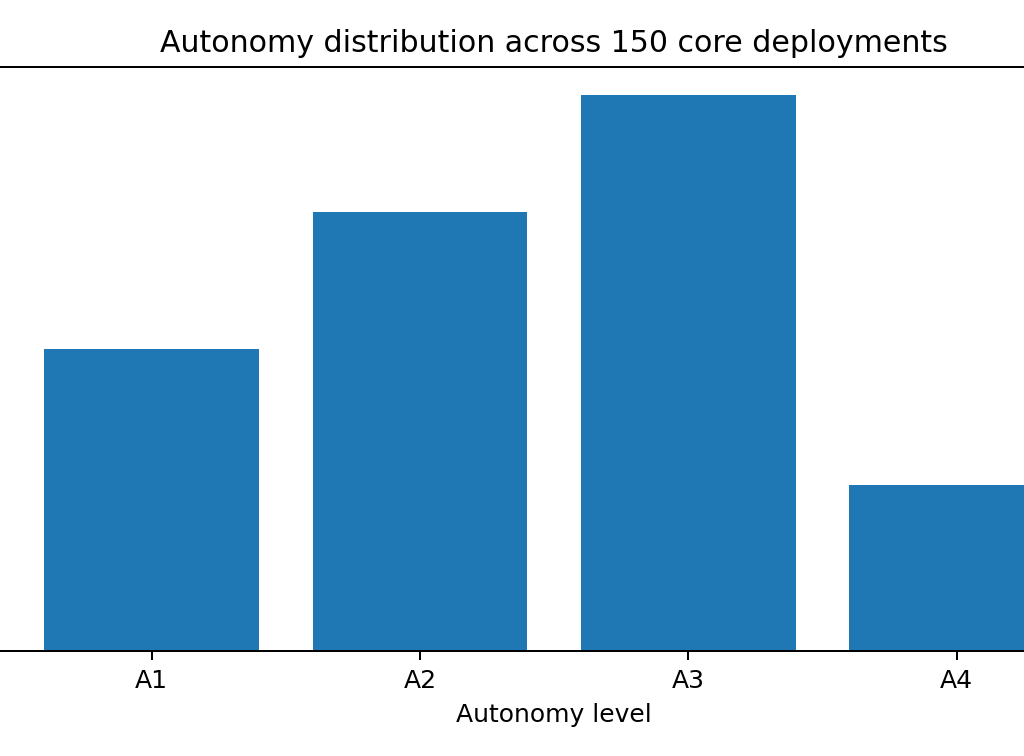
Figure 1. Autonomy distribution across the frozen 150-case dataset.
Enterprise AI agents are no longer a future-tense category. They are quoting freight, routing service tickets, booking medical appointments, reconciling supplier statements, provisioning software, writing code, checking fraud signals, and—under controlled permissions—initiating transactions.
But 150 real deployments tell a more disciplined story than the market hype. The strongest production pattern is not unrestricted autonomy. It is bounded execution: agents handle the routine path automatically while people move to approvals, exceptions, policy, and accountability.
The Brief Script reviewed 392 public records and froze a core dataset of 150 qualifying deployments from 119 organizations. To count, a system had to do more than generate text or retrieve information. It needed evidence of independent tool use or action inside a real enterprise workflow.
That produces a useful contrast with broader adoption surveys. As covered in our enterprise agentic AI deployment-gap analysis, experimentation is widespread but production scaling remains much harder. This study looks below those organization-level adoption numbers and asks a narrower question: what do the production systems that actually cleared an evidence threshold look like? Read: enterprise agentic AI deployment gap
The production story is bounded execution, not “full autonomy”
The enterprise-agent market is moving past the question of whether a model can call a tool. The harder question is what companies are willing to let that system do repeatedly, at production scale, with real business consequences.
In the frozen 150-case dataset, the largest autonomy tier is A3: bounded autonomous action. There are 57 A3 deployments, compared with 31 A1 read agents, 45 A2 human-approved action agents, and 17 A4 end-to-end autonomous workflows. No A5 case cleared the final core under the frozen evidence rules. A3 and A4 together account for 49.3% of the sample.
That distribution matters because it cuts against the most dramatic version of the agent narrative. The strongest deployments are not systems with unlimited freedom. They are systems that can act without a person clicking every step, but only inside an operating envelope that defines permissions, thresholds, approved tools, and exception states.
C.H. Robinson is a useful example. Its transactional freight-quoting agent evaluates proprietary data and issues customer-specific quotes automatically. Quote coverage rose from roughly 60–65% to 100%, while average response time fell from 17–20 minutes to about 32 seconds. People remain responsible for strategic and exception handling, but the routine path no longer waits for a human operator.
At the higher end, Glide’s Slipstream engineering pipeline can build, validate, deploy, monitor, diagnose, open fixes, and automatically roll back a degrading release. Glide reports median merge-to-production time falling from 23 hours to 14 minutes. This is genuine end-to-end autonomy, but it exists in a workflow with version control, tests, observable system state, and reversible actions—the conditions that make autonomy easier to trust.
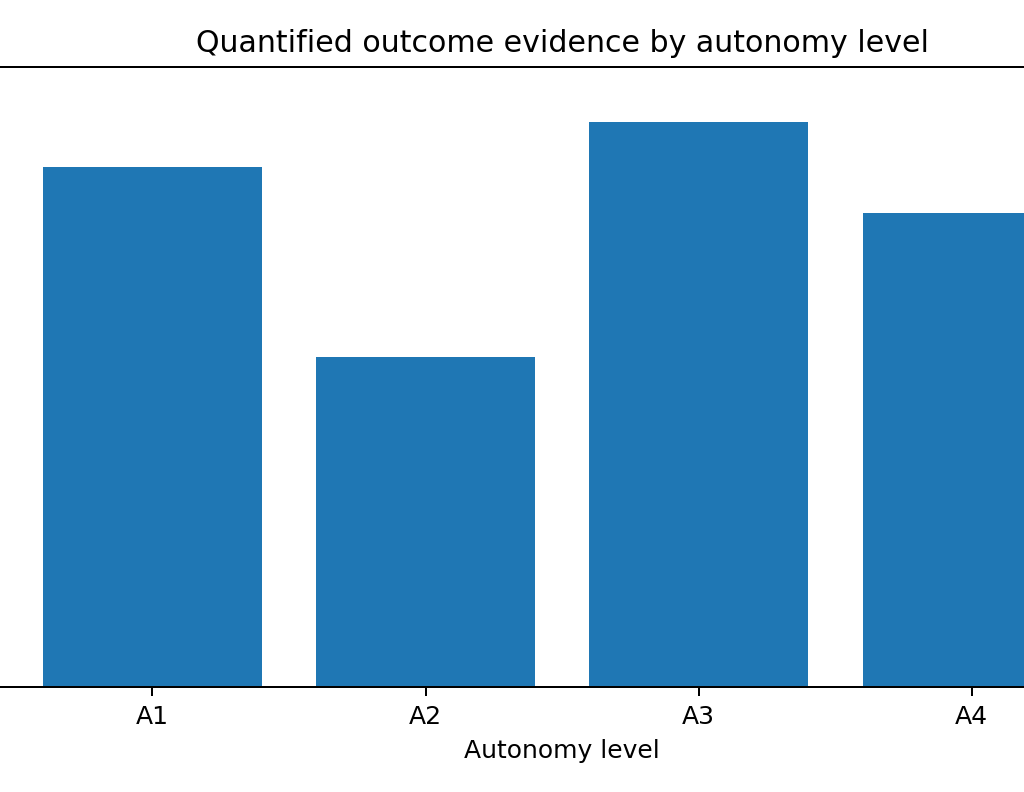
Figure 2. Share of deployments with quantified outcomes by autonomy level.
A3 is the evidence sweet spot
The strongest result in the dataset is not simply that A3 is common. It is that A3 has the best evidence profile.
A3 deployments average 76.6/100 on the study’s evidence score. 91.2% report a quantified outcome, and 94.7% meet the Moderate-or-Strong evidence threshold. A4 systems remain compelling, but they are rarer and slightly less consistently measured. A1 systems can also be well documented, but they are fundamentally less consequential because they do not write to or change business systems.
A2 is the weak spot. Its 45 cases average 63.1/100; only 53.3% disclose a quantified outcome, and 55.6% meet the Moderate-or-Strong threshold. That does not mean A2 is a bad architecture. It reflects the composition of the tier: payments, regulated decisions, commerce actions, claims, and other workflows where an agent can prepare or initiate a real action but a person still authorizes the consequential step.
In other words, technical action often arrives before mature business measurement. This is especially visible in payments, where the public evidence frequently proves that an agent can transact under permissions and authentication before it proves lower cost, faster processing, more revenue, or fewer losses.
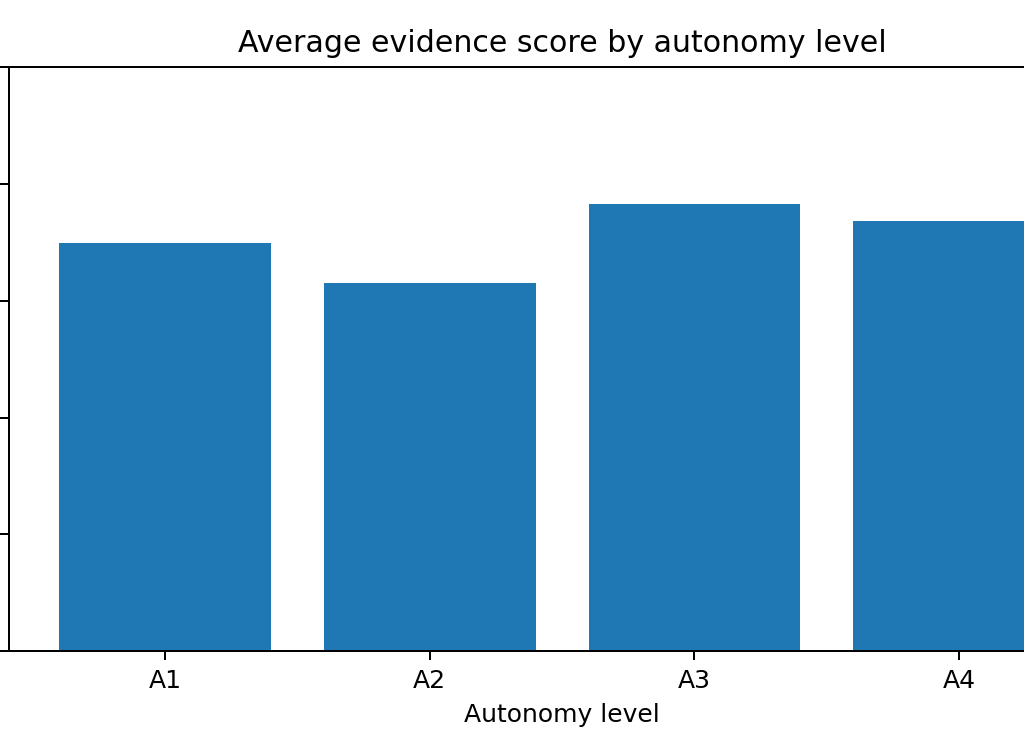
Figure 3. Evidence strength by autonomy level.
Different workflows are at very different stages of maturity
The agent market is not one market. Workflow design determines what can be automated, what can be measured, and how much autonomy an organization can safely expose.
Customer service and IT/network operations are the largest groups in the core, with 21 deployments each. Payments/treasury contributes 19, risk/finance/insurance 17, sales/marketing/commerce 14, software/engineering 13, industrial/field operations 10, healthcare operations 9, supply chain/logistics 8, procurement/finance operations 8, and HR/workforce 7.
Software engineering stands out because the environment is instrumented. All 13 software/engineering cases report a quantified outcome, and 69.2% are A3 or A4. Delivery Hero says Herogen writes, tests, iterates, and self-reviews code before human review; at only 18% rollout, it was already responsible for 9% of the company’s code-change requests, with output estimated as equivalent to 130 senior engineers.
Customer service is also further into production than the chatbot framing suggests. 90.5% of the 21 customer-service cases report quantified outcomes and 71.4% are A3 or A4. Qualifying systems do more than answer FAQs: they route work, update records, complete service requests, schedule appointments, or execute other bounded actions.
Healthcare is smaller but operationally interesting. At Hospital for Special Surgery, the patient-access agent reasons over patient needs, insurance, physician availability, and care pathways, then books appointments directly into scheduling systems and sends confirmations. Staff can intervene at any point. That is a very different system from a medical chatbot.
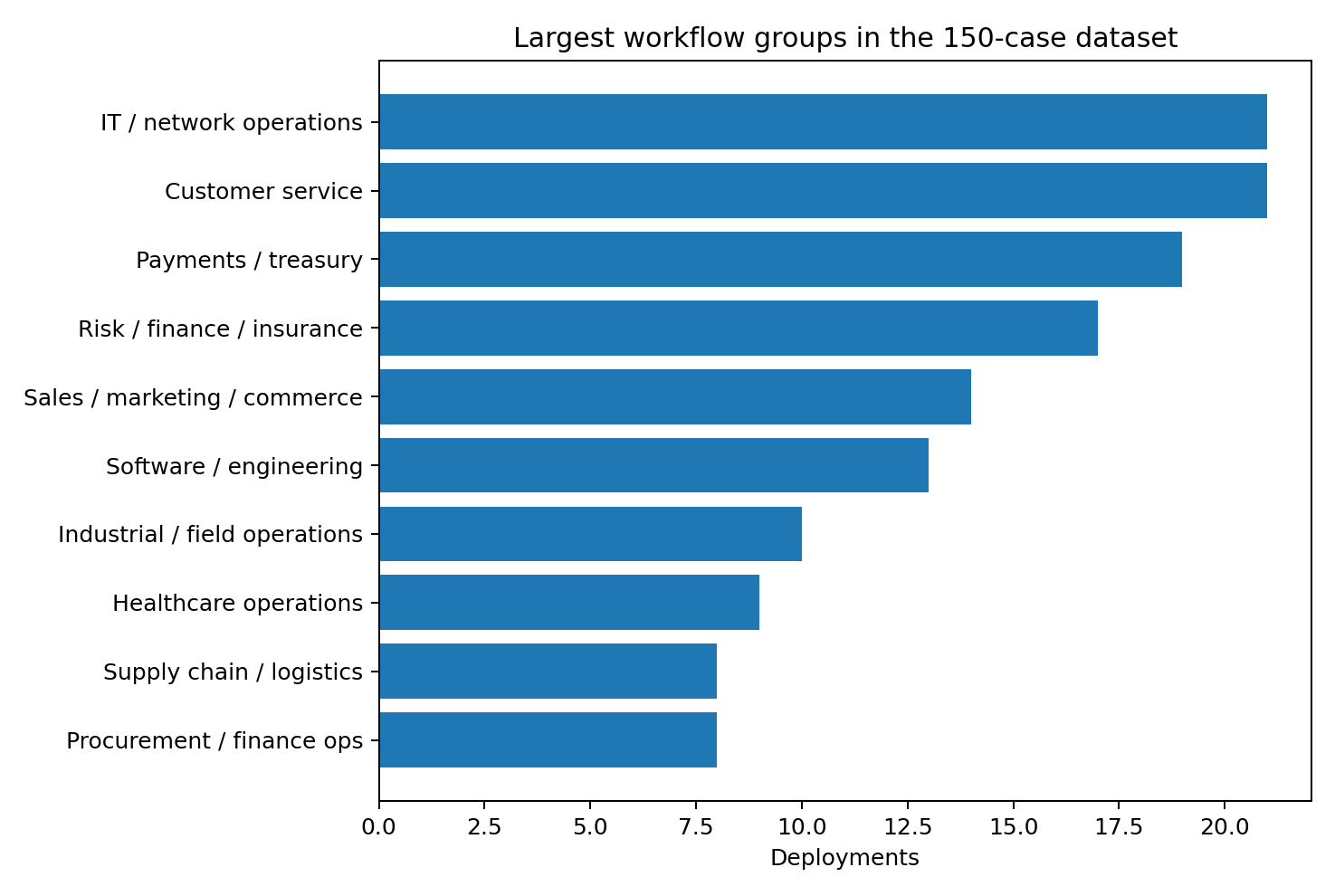
Figure 4. Largest workflow groups in the final core.
Payments show that agents can transact—but ROI is still thin
Payments and treasury are the clearest example of why technical capability and economic evidence should be separated.
The final dataset contains 19 payments/treasury deployments. Yet only 15.8% report a quantified outcome, and just 5.3% are A3 or A4. Most are A2: the agent prepares or initiates a transaction while a person approves the final consequential step.
This is still significant. It means banks, payment networks, and commerce systems are exposing real transaction rails to agents under identity, authorization, limits, and audit controls. The technology has crossed an important threshold from simulation to controlled execution.
But a buyer should not confuse ‘the agent can pay’ with ‘the agent has proven ROI.’ In this workflow family, the public evidence is currently much stronger on capability and control than on measurable economics.
The first measurable return is speed, not dollars
Across the full core, the dominant reported outcome is time. Seventy-one deployments report a time or cycle-speed effect, and 50 report productivity or throughput. Twenty-five report quality or risk. Only 22 explicitly report cost or financial impact, while 10 report revenue or commercial effects. These categories overlap and are not meant to sum to 150.
The pattern makes sense. Cycle time is immediate and relatively easy to observe. Revenue attribution is noisy. Cost savings depend on whether freed capacity is removed, redeployed, absorbed by growth, or used to improve service quality. The operational benefit therefore appears before the accounting benefit.
Bank of Singapore / OCBC makes the pattern concrete. Its Source of Wealth Assistant independently initiates and coordinates KYC preparation tasks, reducing work that could take up to 10 days to roughly one hour. Deutsche Bank reports that a structured four-to-five-document third-party-risk review can fall from around three hours to about 30 minutes using a three-agent workflow, while the final risk decision remains human.
For enterprise teams, this suggests a better measurement sequence: first track cycle time, automation coverage, exception rate, first-pass quality, resolution time, and cases per employee. Then translate those operational effects into cost, capacity, loss avoidance, or revenue once the process is stable enough to attribute value cleanly.
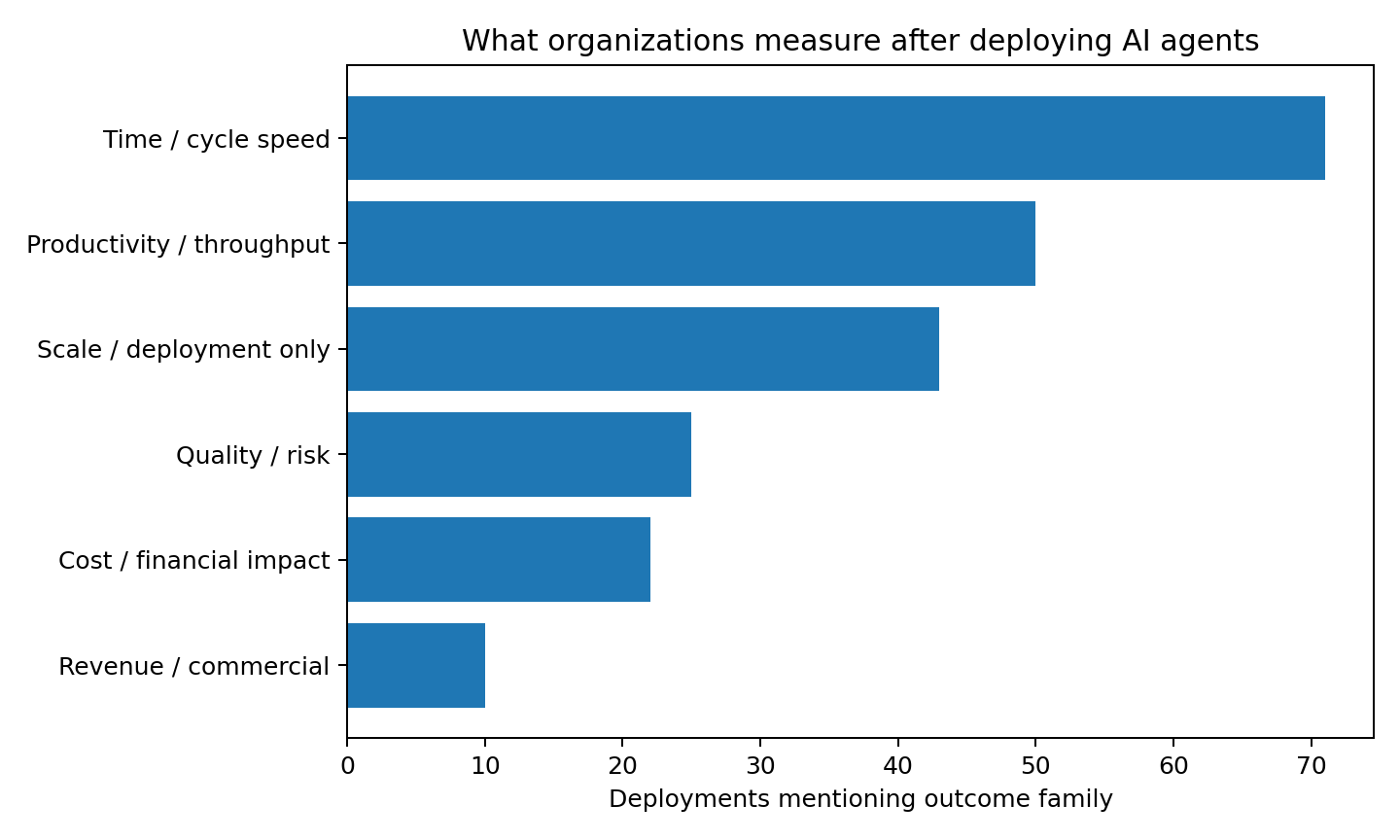
Figure 5. Outcome categories reported across the sample.
Human oversight is being redesigned, not removed
The most consistent operating model in the dataset is not ‘AI replaces the worker.’ It is ‘AI executes the routine path while people own approvals, exceptions, policy, and accountability.’
118 of 150 deployments explicitly describe approval, exception handling, governance/accountability, or active human review. Even under a stricter subset that excludes generic review/use language, 106 still contain explicit approval, exception, or governance controls.
Allianz’s Project Nemo shows what this looks like in practice. Seven agents perform coverage verification, weather checks, fraud checks, payout calculation, and audit summarization, but a human claims professional makes every final payout decision. Allianz reports an 80% reduction in claim processing and settlement time.
This is why ‘human in the loop’ is too vague to be a useful governance description. There are several distinct loops: approval before action, exception handling after automation, post-hoc audit, policy design, and legal accountability. A mature agent deployment should be explicit about which loop applies to which action.
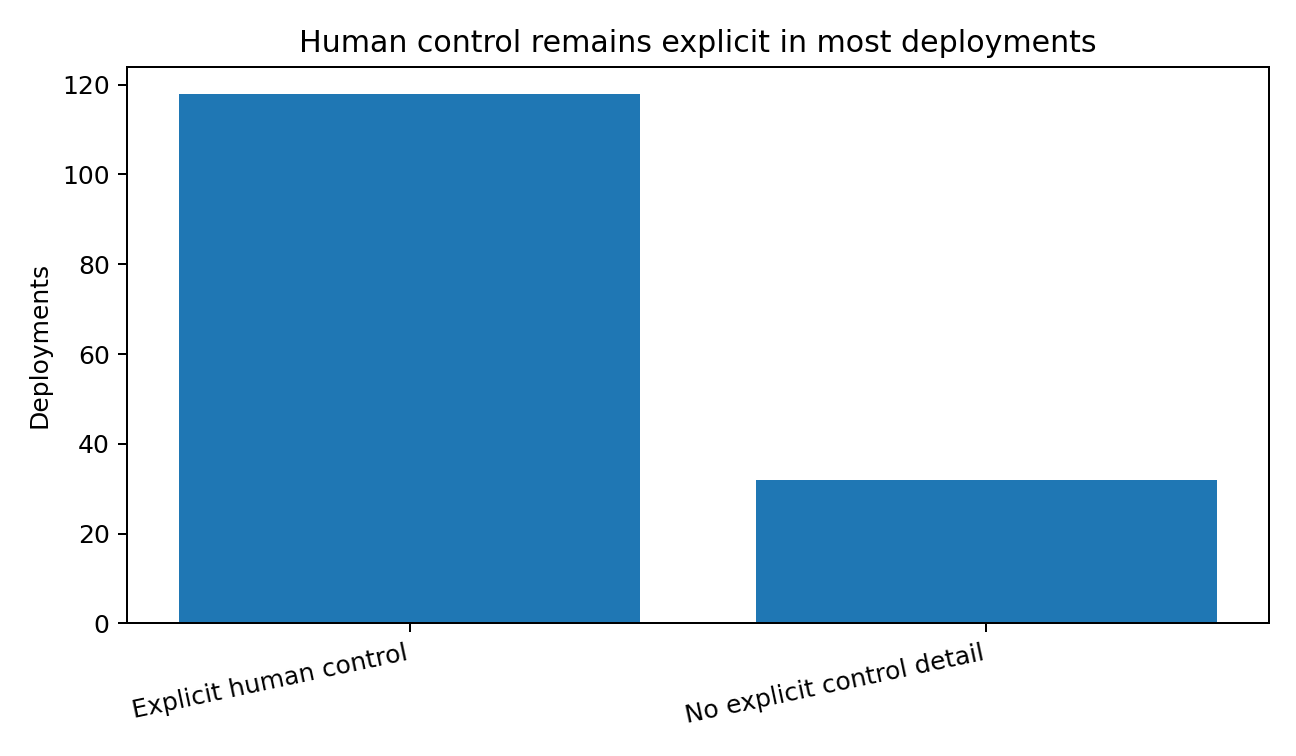
Figure 6. Explicit human control remains visible in most deployments.
“Agentic” marketing still overstates what many systems do
Some of the most informative records in the 392-case research universe are the systems that did not qualify.
A product could have excellent self-service or cost metrics and still fail the behavioral agent test if it only retrieved information or generated text. Other systems remained in proof of concept, described future capabilities rather than observed production behavior, lacked a named adopter, or bundled many agents into an umbrella program without a bounded workflow.
This is also why the study kept failure evidence outside the successful core. Meta’s Project OT, for example, is useful precisely because it shows what can happen when a broad organizational agent rollout outruns workflow clarity, technical stability, or employee acceptance. The point is not that agentic AI failed as a category. It is that autonomy without a well-defined operating model can fail for organizational reasons even when the underlying technology is capable.
The Brief Script’s earlier enterprise AI failure analysis reached a similar conclusion across the broader AI market: technical success, production success, and economic success are three different thresholds. Agents make that distinction even more important because the system can now take action, not merely produce an answer. Read: enterprise AI failure analysis
Vendor stories are more metric-heavy, but not clearly better evidence
The final core contains 64 cases grounded primarily in adopter-owned, regulatory, or independent evidence and 86 supported primarily by vendor or partner evidence. That mix was a deliberate research constraint: no single source ecosystem should define the conclusions.
Vendor-supported cases are more likely to publish a number—80.2% versus 71.9% for the non-vendor group. But their average evidence scores are almost identical: 70.2 for vendor-supported cases and 71.7 for non-vendor/adopter/independent cases. Moderate-or-Strong evidence shares are effectively the same at 77.9% and 78.1%.
The lesson is not ‘vendor evidence is bad.’ Vendor case studies are often the best source for workflow mechanics and before/after metrics. Filings, adopter pressrooms, annual reports, and independent reporting are often better at establishing deployment ownership, limitations, governance, or whether a result is observed rather than projected. The strongest research uses both and keeps those roles separate.
What enterprise teams should do differently
The dataset points to a practical deployment playbook that is less dramatic than the ‘autonomous enterprise’ narrative and more consistent with what is working in production.
Start with a workflow that has a measurable cycle time and a high volume of repetitive decisions. Give the agent enough tool access to complete the routine path, not every conceivable path. Encode hard permissions and exception states. Log every consequential action. Measure automation coverage, time, quality, exception rate, and reversibility before trying to calculate headline ROI.
Then expand autonomy only after the exception distribution is understood. The strongest A3 deployments are not impressive because they eliminate humans. They are impressive because they make the routine path cheap and fast while making the exception path explicit.
For buyers, five questions are more useful than asking whether a product is ‘agentic’: What does it read? Which tools can it choose? What can it write or change? Which actions require approval? What happens when confidence is low or the case falls outside policy? If those answers are missing, the autonomy claim is not yet auditable.
This research also reframes the broader agent adoption debate covered in The Brief Script’s enterprise agentic AI deployment-gap analysis. The hard part is no longer making an agent demo work. It is designing the workflow, permissions, observability, measurement, and human accountability that allow the agent to keep working after the demo ends.
Ten representative production deployments
These examples are illustrative rather than a ranking. The final core contains 150 bounded deployment units.
| Organization | Workflow | Autonomy | Published outcome |
| C.H. Robinson source | Transactional freight quoting | A3 | Quote coverage ~60–65%→100%; response time 17–20 min→~32 sec |
| Allianz source | Project Nemo claims workflow | A2 | Claim processing/settlement time -80%; final payout remains human-approved |
| Bank of Singapore / OCBC source | Source of Wealth Assistant | A2 | Preparation up to 10 days→~1 hour |
| Deutsche Bank source | Third-party-risk evidence review | A2 | Structured review ~3 hours→~30 minutes |
| Delivery Hero source | Herogen software-delivery agent | A3 | 9% of company code-change requests at 18% rollout |
| Glide source | Slipstream engineering pipeline | A4 | Median merge-to-production 23 hours→14 minutes |
| Hospital for Special Surgery source | Patient scheduling and triage | A3 | Direct appointment booking and confirmations; 24/7 production |
| Travelers source | AI Claim Assistant | A3 | ~85–90% claim-filing completion after scaling |
| ZKH Group source | AI Smart Workbench | A3 | 520,000+ autonomous system operations in 2025 |
| Avalara source | Software provisioning/deprovisioning | A3 | 78% automated; ~1,500 hours saved monthly |
Methodology and limitations
The Brief Script researched 392 public records and selected 150 qualifying deployment-level cases. The evidence window was frozen at September 2, 2026. A case entered the core only when public evidence supported a named organization, a bounded workflow, real deployment or production use, and behavior above simple generation or retrieval.
Autonomy was coded separately from architecture. A multi-agent system did not automatically receive a higher autonomy level; the coding depended on what the system could actually do. Evidence was scored on a 100-point protocol covering quantified outcomes, baseline disclosure, measurement period, deployment scale, action detail, human oversight, production maturity, business materiality, adopter evidence, and disclosed limitations.
The final core contains 150 deployments from 119 organizations. Multiple deployments from the same organization were allowed only when the trigger, action chain, and outcome were meaningfully distinct. The evidence score measures disclosure and verifiability—not whether a deployment was objectively better than another deployment.
This is not a random sample and should not be interpreted as market prevalence. Public-source research overrepresents organizations willing to disclose deployments and outcomes. Some metrics originate in company or vendor claims and cannot be independently audited from public material. Categories such as time, cost, quality, and revenue can overlap.
| Research parameter | Frozen rule |
| Research universe | 392 public records |
| Final core | 150 qualifying deployment-level cases |
| Organizations | 119 |
| Evidence cutoff | September 2, 2026 |
| Non-vendor/adopter/independent core | 64 cases (42.7%) |
| Evidence scoring | 100-point disclosure/verifiability protocol |
| Core eligibility | A1–A5 behavioral threshold; A0 excluded |
| Interpretation | Sample findings, not market-prevalence estimates |
The takeaway
Enterprise AI agents are already doing real work in production. The important shift is not from humans to machines; it is from human execution to machine execution inside explicit boundaries.
The strongest evidence in 2026 sits at A3: agents that can act automatically on the routine path, escalate exceptions, and leave a clear control surface for people. That is where autonomy and evidence quality align most consistently in this dataset.
The next test is economic. Enterprises have become much better at proving that agents save minutes, increase throughput, and expand automation coverage. The market will become more mature when those operational gains are routinely connected to cost per task, revenue, loss avoidance, and return on invested capital.
Until then, the right question is not whether a company has AI agents. It is whether those agents can act inside a measurable workflow, under auditable permissions, with evidence that the work is actually better.
Related Brief Script research: 250 enterprise AI case studies • AI agents enterprise news