The Future of SaaS: How AI Agents are Killing the Per-Seat Model

The Brief
The Pulse On February 3, 2026, approximately 285 billion dollars in market capitalization evaporated from SaaS stocks in a single 24-hour period. The catalyst was not a recession or an interest rate change. It was the accelerating recognition that AI agents, which execute enterprise software workflows without a human user logged in, have broken the […]
Why It Matters
The story matters because it changes how buyers, builders, or policymakers should read the AI Business and Startups market.
Watch Next
Watch whether the signal becomes a budget, procurement, or platform decision in the next cycle.
The Pulse
On February 3, 2026, approximately 285 billion dollars in market capitalization evaporated from SaaS stocks in a single 24-hour period. The catalyst was not a recession or an interest rate change. It was the accelerating recognition that AI agents, which execute enterprise software workflows without a human user logged in, have broken the fundamental assumption on which per-seat pricing was built.
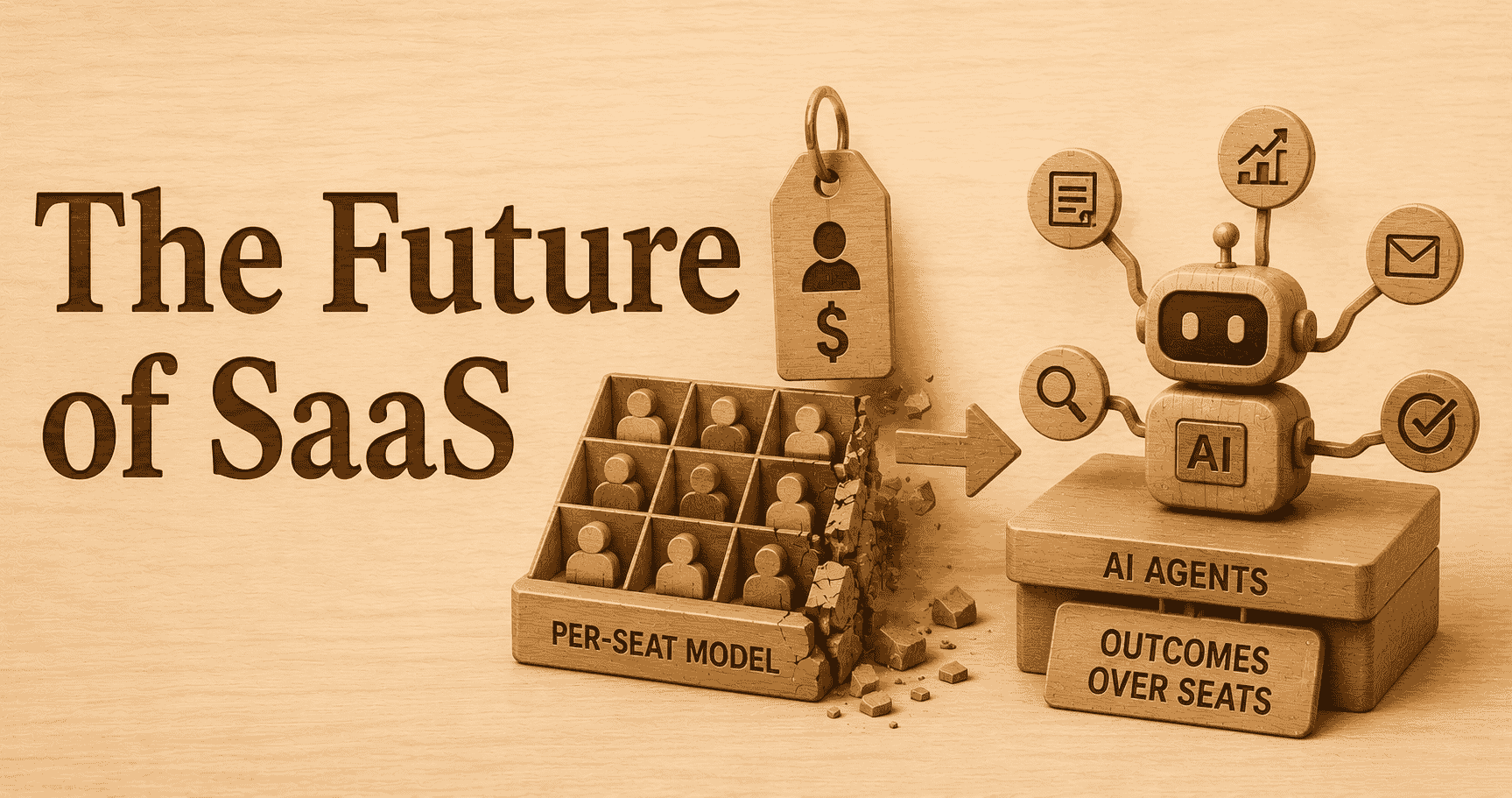
Per-seat pricing assumes the unit of software consumption is a human user. That assumption held as long as humans were the only entities doing work through software systems. AI agents execute work at scale without creating a user footprint, and the relationship between employee headcount and software license count, the foundation of the per-seat model for over two decades, is no longer reliable.
Salesforce, Microsoft, and ServiceNow had all seen this coming before the market did. Each began transitioning pricing models before February, which is why Salesforce dropped only 4% in the day’s session while smaller horizontal SaaS companies lost 70 to 80% from their 52-week highs.
Core Significance
Why it matters:
- Per-seat pricing assumes a human user, and AI agents are not human users: Agents execute work at scale without logging in as individual users. If 10 AI agents can do the work of 100 sales reps, an enterprise needs 10 Salesforce seats, not 100. The revenue model built on headcount growth is structurally broken once agents become the primary executors of enterprise workflows.[MindStudio SaaS pricing AI agent era per seat broken]
- The three replacement models are consumption, outcome, and hybrid, and each carries different enterprise risk: Salesforce Agentforce charges 2 dollars per conversation or 0.10 dollars per standard action under its Flex Credits model. Microsoft Copilot Studio charges 0.01 dollars per credit or 200 dollars per 25,000 credits. ServiceNow’s Pro Plus layer adds a 50 to 60% uplift on existing tiers plus per-action token consumption on top.[MPT Solutions AI agents killing seat pricing replacing it]
Microsoft’s broader strategy reveals the transition playbook most incumbents are running: Microsoft 365 Copilot still charges 18 to 42.50 dollars per user per month as pure seat pricing for customers who have not yet made the agent shift, while Copilot Studio runs on consumption credits for customers who have. Microsoft collects seat revenue from customers who do not know the transition is happening and consumption revenue from those who do.
- Gartner predicts 40% of enterprise SaaS spend will shift to usage, agent, or outcome-based pricing by 2030: Deloitte’s TMT Predictions 2026 forecasts seat-based revenue share declining from 21% to 15% over the same period. The transition is already showing up at enterprise contract renewals as vendors impose what Tropic Research calls the AI Tax, a 20 to 37% price uplift through AI feature bundling or forced migration to AI-inclusive SKUs.[SoftwareSeni SaaS pricing per seat usage outcome renewal 2026]
Deep Context: What actually happened in February and April 2026
The February 3 selloff was the moment public markets repriced per-seat SaaS’s terminal value, but the structural pressure had been building for months. Bain and Company published a report in early 2026 characterizing per-seat pricing as structurally vulnerable to AI agent adoption, with vendors who fail to transition pricing within 18 months facing permanent revenue erosion.[Taskade great SaaS unbundling AI agents per seat model]
HubSpot, Atlassian, and Figma each crashed 70 to 80% from their 52-week highs in the February to April window. Workday and Adobe fell 26 to 38% year to date. These are not companies that had weak earnings, they had strong products and solid revenue. The market was not repricing their current performance, it was repricing their terminal value, specifically reducing its estimate of how much per-seat revenue would exist in 2030 and beyond.
A second selloff on April 9 added further pressure, with Cloudflare falling 12%, Snowflake dropping 9%, and ServiceNow losing 7% in a single session. The iShares Software ETF fell 20 to 30% across the February to April window.[Tech Insider AI agents 2 trillion SaaS value who survives]
The seat harvest playbook most vendors are quietly running
The nuanced reading of these events is not that per-seat revenue is about to disappear. It is that vendors are actively managing a transition designed to preserve seat revenue while consumption revenue ramps. Microsoft is the clearest illustration, harvesting seat fees from customers in steady state while the consumption line builds from customers who have already adopted agents.
Salesforce’s Agentic Enterprise License Agreement represents the most explicit large-incumbent template for this transition. The AELA offers unlimited use of Agentforce, Data Cloud 360, and MuleSoft for a fixed fee on two to three year terms, effectively converting a seat-based relationship into a capacity-based one. As covered in our Salesforce news 2026 report, Agentforce reached 1.2 billion dollars in ARR with 205% growth, the first signal that the consumption model can actually scale faster than the seat model it replaces.
Data Insights
By the numbers:
All figures from Gartner, Deloitte, Bain, SaaStr, and vendor pricing disclosures cited inline.
- Average SaaS prices rose 8 to 12% annually for years by relying on seat-based price hikes as the primary growth lever: SaaStr’s 2025 analysis documented the mechanism, vendors expanded platform scope through bundling and added seat types to justify price increases, until AI agents began compressing the seat count those price hikes depended on.[Teknalyze end of per-seat pricing AI reshaping SaaS models]
Intercom’s shift to outcome-based pricing at 0.99 dollars per AI-resolved conversation, charging only when the customer confirms resolution or does not return, drove 40% higher adoption than its prior seat model. The model forces vendors to actually deliver measurable value rather than collecting fees for software access that may or may not produce outcomes.
- Software gross margins will compress from 85% to approximately 65% as AI agent inference costs become embedded in operating costs: Traditional SaaS had near-zero marginal cost per user because software is copied rather than consumed. AI agents have material per-query inference costs that scale with usage, which changes the unit economics of the business model at a structural level.
- Proprietary data is the defining moat in the agentic SaaS era, not feature breadth: Bain’s analysis identified companies that own deep vertical data, usage patterns, client histories, regulatory templates, as the category most likely to survive seat compression, because an AI agent selecting tools in real time will route to whatever has the best data, not whatever has the most features.[Advisable micro SaaS 2026 viable strategy AI feature bloat]
Table 1: How the major enterprise SaaS vendors are pricing AI agents in 2026
| Vendor | AI agent product | Pricing model | Unit price | Human seat position |
| Salesforce | Agentforce, AELA | Consumption or fixed capacity | 2 dollars per conversation, 0.10 per action | Seat pricing continues, AELA replaces it at enterprise |
| Microsoft | Copilot Studio | Consumption credits | 0.01 dollars per credit, 200 per 25K credits | M365 Copilot seat add-on still 18 to 42.50 per user |
| ServiceNow | Now Assist | Seat uplift plus consumption | 50 to 60% uplift on base SKU plus token usage | Pro Plus required for AI features on top of existing |
| Intercom | Fin | Outcome-based | 0.99 per resolved conversation | No seat component for Fin, agent-only pricing |
Table 2: Per-seat model versus consumption model enterprise comparison
| Dimension | Per-seat pricing | Consumption or outcome pricing |
| What is counted | Human users with login credentials | API calls, conversations, actions, or outcomes |
| Revenue growth mechanism | Headcount growth and annual price hikes | Usage expansion and agent deployment scale |
| Predictability | High, known seat count times monthly rate | Variable, finance teams struggle to model usage |
| AI agent compatibility | Structurally broken, agents have no seats | Designed for agent-first workflows |
| Vendor margin structure | Near-zero marginal cost, 85% gross margin | Material inference cost per query, 65% gross margin |
The Business Case: What enterprise buyers should do right now
Enterprise buyers currently in seat-heavy contracts have unusual negotiating leverage in 2026 that may not persist once vendors complete their pricing transitions. Salesforce’s own AELA exists because Salesforce recognized that enterprises with strong agent deployment plans could get better value, and better retention from Salesforce’s perspective, under a capacity model than under per-seat contracts that would shrink as agents replaced human users.
Concrete negotiating protections worth building into any enterprise SaaS renewal in 2026 include three provisions. A price protection clause capping annual increases at 3 to 5% protects against the AI Tax uplift pattern. A SKU-level price lock prevents forced migration to a more expensive AI-inclusive tier mid-contract. A mid-term review clause at 12 to 18 months creates a contractual window to shift to consumption pricing once usage patterns are established.
As covered in our Enterprise AI Stack Cost report, the integration and orchestration layer around enterprise AI deployments typically costs 40 to 60% of total build cost, and the SaaS pricing model a vendor uses directly affects how that cost scales as agent deployment expands. Understanding whether a vendor is on seat-harvest or consumption-transition pricing is as important to long-term cost modeling as the initial contract rate.
Expert nuance: The margin compression story is under-reported relative to the seat story
Most SaaS coverage in 2026 focuses on seat compression, the reduction in human users that AI agents produce. The structurally deeper story is gross margin compression. Traditional SaaS had near-zero marginal cost per user, software is copied not consumed, which produced gross margins around 85% that justified software company valuation multiples significantly above the broader market.[Medium Alan Shore death of seat AI agents SaaS business model]
AI agents have material per-query inference costs. Every Agentforce conversation, every Copilot Studio action, every Now Assist workflow completion costs compute. That transforms what was effectively a zero-marginal-cost business into one with a cost of goods sold that scales directly with revenue.
The practical consequence is that software gross margins will compress toward 65% as AI becomes the primary driver of revenue growth, fundamentally changing the multiple investors should apply to SaaS companies. Venture capitalists are already shifting from ARR multiples to gross profit multiples as the evaluation framework, since ARR with a 65% margin and ARR with an 85% margin represent materially different businesses despite identical top-line figures.
Strategic Outlook
- Enterprise buyers should start treating FinOps as AgentOps before end of 2026: Vendors are structuring consumption pricing specifically to extract maximum uplift during the overlap period when enterprises have both seat licenses and agent deployments running simultaneously. Enterprises that do not actively model their agent usage against consumption pricing will pay more without understanding why.
- Incumbents with large customer bases are better positioned than their stock performance suggests: Salesforce and Microsoft have the distribution, the integrations, and the customer data to become the orchestration layer that agents run on top of, which is a defensible position that pure seat compression analysis misses. The question is whether they can execute the pricing transition faster than AI-native competitors can displace them.[Outlook India SaaSpocalypse 2026 agentic AI per-seat SaaS]
- The M&A wave in enterprise software is just beginning: Predictions circulating in enterprise software circles include at least 3 major SaaS companies being acquired at 50% or more discounts to their 2025 peaks within 18 months, as private equity and platform companies acquire distressed software assets whose underlying customer relationships and data are worth more than their current equity values suggest.
Key Question Answered
How are AI agents killing per-seat SaaS pricing, and what is replacing it?
AI agents execute enterprise software workflows without a human user logged in. Per-seat pricing charges for access by individual human users, meaning every agent deployed to replace a human worker reduces the license count rather than growing it. Salesforce’s own Jason Lemkin summarized the arithmetic: if 10 AI agents do the work of 100 sales reps, you need 10 Salesforce seats, not 100.
The February 3, 2026 SaaSpocalypse wiped approximately 285 billion dollars from SaaS stocks in 24 hours as markets repriced terminal per-seat revenue. Three models are replacing it: consumption pricing at the action or conversation level, outcome pricing tied to measurable business results like Intercom’s 0.99-dollar-per-resolved-conversation model, and hybrid flat-rate capacity agreements like Salesforce’s Agentic Enterprise License Agreement. Gartner projects 40% of enterprise SaaS spend will transition to these models by 2030, with seat-based revenue share declining from 21% to 15%, and SaaS gross margins compressing from 85% to roughly 65% as per-query inference costs become embedded in the cost of delivering AI-driven features.
The Takeaway
The per-seat model was never anything more than a convenient proxy for value. It worked because the number of human users roughly correlated with how much value an enterprise extracted from software. AI agents have decoupled those two variables. Value delivered can now increase while the human user count stays flat or falls.
The SaaSpocalypse was not a market overreacting to hype. It was the equity market catching up to a structural change that enterprise software companies had seen in their renewal conversations for at least 18 months before the selloff. Salesforce, Microsoft, and ServiceNow all began building consumption pricing infrastructure before the market moved, which is why the companies with the clearest transition strategies fell the least.
For enterprise buyers, the practical message is that the current moment offers unusual negotiating leverage that will narrow once vendors complete their transitions. For enterprise software investors, the message is that the valuation frameworks built for 85% gross margin, headcount-correlated ARR businesses describe a category that is structurally changing into something different, one where gross profit margins and agent utilization rates will matter more than seat count and annual contract value in determining which companies capture durable value on the other side of this transition.