The Pulse
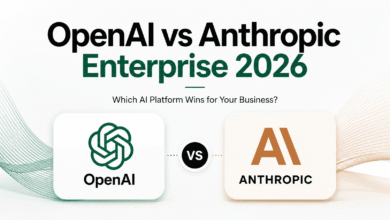
Anthropic just passed OpenAI in revenue with 5% of ChatGPT’s user base. OpenAI has 900 million weekly active users and $24 billion in annualized revenue. Anthropic has roughly 45 million users and $30 billion in annualized revenue. That ratio, six times more revenue per user, is the most important data point in the entire how to monetize AI 2026 conversation. Consumer scale and revenue scale are not the same thing. The companies extracting the most money from AI are not the ones with the most users. They are the ones charging for measurable enterprise outcomes rather than consumer access. The monetization question in 2026 is not whether AI generates revenue. It is which business model extracts the most revenue from the value AI actually delivers.
Core Significance
Why it matters:
- The 2025 Pilots Are Hitting 2026 Renewal Cliffs: Most enterprise AI contracts signed during the 2025 adoption wave were justified on potential rather than demonstrated ROI. As Bessemer Venture Partners documented in their AI pricing playbook, copilots offering advice without closing the loop live in dangerous soft ROI territory. As those 2025 pilots hit renewal cycles in 2026, procurement teams are asking whether the value delivered justifies the contract renewal. Companies that priced on access are discovering that access alone does not survive a CFO review.
- 92% of AI Companies Have Already Moved to Mixed Pricing: A 2025 industry report found that 92% of AI software companies now use mixed pricing models combining subscriptions with usage, credits, or outcome-based components. Pure subscription pricing, the model that dominated SaaS for 15 years, is now a minority approach in AI. The market has moved. The companies that have not moved with it are discovering lower renewal rates, higher churn, and enterprise procurement teams demanding pricing structures that reflect delivered value rather than promised capability.
- Outcome-Based Models Are Generating 94% Gross Margins: Companies incorporating outcome-based elements in their pricing have achieved gross margins as high as 94%, compared to sometimes negative margins for pure usage-based approaches in cost-heavy AI workloads. The margin premium for outcome-based pricing is the clearest signal available that the market is willing to pay significantly more for verified results than for access or consumption.
Deep Context: How AI Pricing Evolved from Add-On to Architecture
The history of AI pricing runs through three distinct phases, each of which is still visible in the market simultaneously in 2026.
Phase one was the feature add-on era, running from roughly 2020 to 2023. Companies embedded AI into existing products and charged a premium on their existing subscription tiers. Grammarly added AI writing suggestions. Notion added AI summaries. HubSpot added AI email drafting. The monetisation logic was simple: existing customers pay more for the same product with AI features. The problem, which took two years to become visible, is that selling AI as an add-on depresses adoption. Customers who do not use the AI feature do not feel the value of the premium and resist renewal.
Phase two was the usage-based era, running from 2023 to 2025. OpenAI’s API pricing structure, charging per token consumed, established usage-based billing as the default model for AI infrastructure products. The appeal was alignment: customers pay for what they use, and providers earn more as usage grows. The problem, which Replit discovered before anyone else at scale, is that usage-based pricing at the infrastructure level generates negative gross margins when model inference costs are high. Replit’s gross margin reportedly dipped negative during a usage surge in 2024 before pricing changes brought it back into the 20 to 30% range.
Phase three is the outcome-based era, which began in earnest in 2025 and is accelerating through 2026. Zendesk charges per resolved support ticket rather than per seat. Salesforce Agentforce prices per successful agent action. AI workflow tools are increasingly charging per verified business outcome rather than per API call or per user licence. The alignment is tighter than any previous model: the customer pays only when value is demonstrably delivered.
As covered in our agentic AI enterprise analysis, the shift from AI-as-tool to AI-as-autonomous-agent is the defining technology transition of 2026. The monetisation structures are shifting in parallel. Agents that complete tasks create verifiable outcomes. Verifiable outcomes support outcome-based billing. Outcome-based billing supports premium pricing. The architecture of AI is finally catching up with the monetisation model that the market always preferred.
Data Insights
By the numbers:
- $30 Billion: Anthropic’s annualized revenue run rate in April 2026, surpassing OpenAI’s $24 billion for the first time, per SaaStr and confirmed by TechCrunch and Bloomberg. SaaStr — Anthropic passed OpenAI April 2026
- $144 Million: Replit’s ARR in 2025, up from $2 million before it launched AI coding features and moved to usage-based pricing. The transition from flat subscription to usage-based billing is what unlocked the scale. Schematichq — AI-first B2B SaaS Economics
- 92%: Share of AI software companies now using mixed pricing models combining subscriptions with usage, credits, or outcome-based components, per a 2025 industry report.Getmonetizely- AI first B2B
- 59%: Share of software companies expecting usage-based models to grow as a share of revenue in 2025, an 18-point jump versus 2023, per the 2025 Monetization Monitor. Tridens Technology — SaaS Trends 2026
- 75%: Share of companies building AI agents that have no systematic approach to pricing them, per Nevermined’s outcome-based AI revenue analysis. The majority of the agent market is leaving significant revenue on the table. Nevermined — Outcome-Based AI Revenue Statistics
- 94%: Maximum gross margin achieved by companies using outcome-based pricing elements, versus sometimes-negative margins for pure usage-based approaches in high-inference-cost products.
- 40%: Share of enterprise SaaS spend that Gartner projects will shift toward usage, agent, or outcome-based pricing by 2030, up from under 5% in 2022. Deloitte — SaaS Meets AI Agents 2026
- 52%: Average gross margins for AI products estimated by ICONIQ’s 2026 State of AI survey, highlighting the margin compression that is forcing AI companies toward more sophisticated pricing structures. Chargebee — SaaS Business Model AI Monetization
- 12%: Share of AI-native product companies that have adopted outcome-based pricing so far, with 40% actively experimenting with it. The gap between 12% adoption and 40% experimentation is the near-term monetisation opportunity.
Table 1: The Six AI Monetisation Models: How Each Works in 2026
| Model | How It Works | Best For | Real Example | Gross Margin Range |
|---|---|---|---|---|
| Subscription/seat | Flat fee per user per month | Broad consumer adoption | ChatGPT Plus $20/month | 60-70% |
| Usage/token-based | Per API call, token, or compute consumed | Variable workloads, developers | OpenAI API per token | Variable, can go negative |
| Outcome-based | Per verified result delivered | High-value enterprise workflows | Zendesk per resolved ticket | Up to 94% |
| Hybrid | Base subscription + usage overage + credits | Scaling enterprise customers | Cursor $20 + compute credits | 20-30% improving |
| Platform/marketplace | Percentage of transactions or listings | Ecosystem businesses | Salesforce AppExchange AI | High, asset-light |
| Enterprise licensing | Annual custom contract, negotiated | Large organisations, compliance-sensitive | Anthropic enterprise contracts | 80%+ |
Table 2: The Renewal Cliff : What Kills AI Monetisation at Scale
| Failure Pattern | What It Looks Like | Why It Fails at Renewal | The Fix |
|---|---|---|---|
| Soft ROI positioning | “AI will save you time and improve productivity” | CFO cannot verify the claim at renewal | Switch to measurable outcome metrics before contract ends |
| Feature add-on pricing | AI bundled into existing tier at premium | Non-AI users resent the premium, churn increases | Separate AI tier or usage-based add-on |
| Flat subscription for variable AI workloads | Fixed monthly fee regardless of usage volume | Margin goes negative during high-usage periods | Usage-based or credit-based model |
| No measurement infrastructure | Cannot prove value delivered | Renewal conversation is emotional not analytical | Instrument value tracking from day one |
| Single-channel revenue model | Pure subscription with no usage expansion | Revenue cap hit at seat count limit | Add usage expansion path alongside subscription |
The Business Case: Three Monetisation Models Actually Working in 2026
The AI monetisation landscape is not uniform. Different models are winning in different market segments. The three that are generating the most documented evidence of sustainable revenue in 2026 are enterprise API licensing, usage-based hybrid pricing, and emerging outcome-based billing.
Model 1: Enterprise API Licensing: The Anthropic Blueprint
Anthropic’s revenue trajectory is the clearest case study available for enterprise API licensing done correctly. The company grew from $1 billion ARR in January 2025 to $30 billion in April 2026, a 30x increase in 15 months, with roughly 5% of ChatGPT’s consumer user base.
The mechanism is enterprise depth rather than consumer breadth. Anthropic has 300,000-plus business customers, with enterprise accounts spending over $1 million per year doubling from 500 to 1,000 in less than two months following the February 2026 Series G raise. The revenue is overwhelmingly API-driven: enterprises pay per token consumed at scale, with volume discounts structured as annual committed spend rather than pay-as-you-go. The retention is structural because switching a coding workflow, a customer support system, or an enterprise data pipeline built on Claude is not easy. Every enterprise development team that deploys Claude Code becomes a recurring line item with high switching costs.
The lesson for founders is that the enterprise API model requires patience at the beginning and generates compounding revenue at scale. The first $1 million enterprise contract takes longer to close than a thousand $1,000 subscriptions. But one thousand $1,000 subscriptions generate $12 million ARR with high support costs, high churn risk, and no switching cost protection. One thousand enterprise API contracts at $30,000 average annual spend generate $30 million ARR with structural retention.
Model 2: Usage-Based Hybrid: The Replit Blueprint
Replit’s revenue journey from $2 million to $144 million ARR is the most documented case study in AI usage-based pricing. The transition required two changes: launching AI coding features and moving to usage-based plans.
As covered in our Best AI Tools for Startups analysis, Cursor’s mid-2025 pricing change from request-based limits to a compute credit pool system is the current best-practice implementation of this model. The Pro plan at $20 per month includes $20 of frontier model usage at API pricing, with unlimited access to core features. The usage credits act as a consumption meter that aligns cost with value for the customer while protecting margins for the provider.
The hybrid model solves the two fundamental problems of pure subscription and pure usage-based approaches. Pure subscription caps revenue growth at seat count. Pure usage-based generates negative margins during unexpected high-usage periods. The hybrid gives customers the predictability of a base subscription while giving providers the expansion revenue of usage-based billing. 59% of software companies expect this model to grow as a share of revenue in 2025, and the trajectory into 2026 confirms that expectation.
Model 3: Outcome-Based Billing: The Emerging Premium
Outcome-based billing is where the highest margins are and where 75% of the companies building AI agents have not yet gone. Charging per resolved support ticket rather than per seat, per lead qualified rather than per API call, or per fraud prevented rather than per model inference converts AI’s value proposition from a vague productivity claim into a measurable commercial transaction.
As Bessemer Venture Partners documented, the companies that close the loop entirely by delivering and measuring outcomes have the strongest pricing power and the most defensible renewals. The renewal cliff that is killing 2025 pilot contracts in 2026 does not exist for outcome-based models because the customer’s invoice reflects actual value received rather than promised capability.
The current limitation is instrumentation. Outcome-based billing requires tracking value creation in real time with enough precision to bill accurately and defend the invoice. Companies that have built this infrastructure are extracting up to 94% gross margins. Companies that have not are still on flat subscriptions wondering why churn is increasing at renewal.
Between the lines:
The Anthropic versus OpenAI revenue comparison contains the most important lesson in AI monetisation that most founders are not applying. OpenAI chose consumer breadth: 900 million weekly active users, a $20 per month subscription, massive adoption. Anthropic chose enterprise depth: 300,000 business customers, custom contracts, API infrastructure embedded in critical workflows. Anthropic now earns more. The margin structure is better. The retention is stronger. The lesson is not that consumer AI is wrong. It is that for most founders building AI products in 2026, the enterprise path generates more revenue per customer, better margins, and more durable retention than the consumer path, even when the consumer path produces more users.
Regional Spotlight: AI Monetisation for Pakistani Founders and Freelancers
For Pakistani founders and freelancers, the AI monetisation models emerging globally create specific and immediately actionable opportunities that are not being discussed in the domestic startup conversation.
The Opportunity:
Pakistani freelancers serving international clients can apply outcome-based pricing directly to their AI-augmented services right now without building a product. A freelance developer who previously charged $15 per hour for code delivery can reframe the engagement as delivery of specific outcomes: working features, test coverage percentage, deployment readiness. AI tools compress the time to deliver those outcomes. The client does not pay for hours. The client pays for outcomes. The developer earns the same or more per outcome while delivering faster.
This is not theoretical. It is the same logic that drives the 5 to 8 times hourly rate premium for AI-augmented developers over non-AI developers. As covered in our Pakistan AI economy analysis, the income premium comes from delivering more value per engagement, not from charging more per hour. Outcome-based pricing formalises that premium into the contract structure rather than leaving it as an informal productivity advantage.
For Pakistani founders building AI products, the API licensing model is more accessible than it appears. AWS Marketplace, Google Cloud Marketplace, and Azure Marketplace all allow Pakistani companies to list AI products and services with enterprise billing infrastructure provided by the platform. The payment barrier that complicates direct international subscription billing does not apply to marketplace listings because the cloud platform handles billing and remittance. A Pakistani AI product listed on AWS Marketplace can access enterprise procurement budgets in the US, UK, and Gulf without any domestic payment infrastructure.
The Crisis:
The 75% of AI agent builders with no systematic pricing approach includes most Pakistani AI startups. The technical work of building the agent gets done. The commercial work of designing a monetisation model that survives an enterprise renewal conversation does not get done. An AI product built without a pricing architecture is not a business. It is a demonstration. The $1 billion National AI Fund’s human capital investments need to include commercial and pricing education alongside technical AI training, or the talent it develops will produce technically excellent products that cannot generate sustainable revenue.
Expert Nuance: Why the Renewal Cliff Is the Defining Challenge of 2026
Bessemer Venture Partners’ warning about the renewal cliff is the most important commercial insight in the AI monetisation space in 2026. It deserves more attention than it is receiving.
In 2025, most enterprises operated in AI adoption-at-all-costs mode. Procurement teams approved AI contracts on the strength of vendor demos, analyst reports, and the fear of falling behind competitors. Price sensitivity was low. The question was not whether to buy but which vendor to buy from.
In 2026, those 2025 contracts are coming up for renewal. And the question procurement teams are asking is different. Not “should we have AI?” but “did this specific product deliver enough specific value to justify this specific cost for another year?” Companies that sold on soft ROI positioning, productivity improvement, time saving, morale enhancement, are discovering that these claims do not survive a CFO’s renewal review. Companies that sold on measurable outcomes, tickets resolved, leads qualified, code review time reduced, are discovering that renewal conversations are straightforward.
The renewal cliff is not a product problem. It is a pricing architecture problem. A company that built a genuinely useful AI product but priced it on access rather than outcomes is now in the renewal conversation with no measurement evidence to support the contract. A company that built the same product but instrumented outcome tracking from day one is renewing at expansion rates.
For any founder whose AI product is approaching its first enterprise renewal cycle in 2026, the single most important commercial action is building the measurement infrastructure that proves value delivered before the renewal conversation happens.
Strategic Outlook: What’s Next
1. Outcome-Based Pricing Goes From 12% to Mainstream by 2027
Only 12% of AI-native product companies have adopted outcome-based pricing, but 40% are actively experimenting with it. The gap between experimentation and adoption typically closes within 12 to 18 months once early adopters demonstrate that the model survives enterprise procurement scrutiny. The companies that adopt outcome-based pricing in 2026 before it becomes the expected standard will have a pricing architecture advantage over competitors who adopt it under competitive pressure in 2027.
2. Agent Pricing Becomes the Central Commercial Question
Gartner projects that 40% of enterprise SaaS spend will shift toward usage, agent, or outcome-based pricing by 2030. The agent pricing question, whether to charge per action, per outcome, per agent-seat, or per task completed, does not yet have a settled answer. The companies that solve this question cleanly in 2026 will define the pricing norms their entire category follows. This is the commercial equivalent of the early SaaS companies defining what a per-seat subscription means. The market is in a formative period where pricing innovation creates durable advantage.
3. The Pakistan AI Services Monetisation Window
Pakistan’s freelance developer workforce is positioned to transition from time-based to outcome-based monetisation faster than most comparable markets because the AI tools are available, the international client base is established, and the transition requires commercial reframing rather than technical capability development. The barrier is not skill. It is the commercial confidence to propose outcome-based contracts to international clients who are already accustomed to paying for results from their own AI vendors.
Key Question Answered
How do you monetize AI products and services in 2026?
The most effective how to monetize AI 2026 approaches are enterprise API licensing, usage-based hybrid pricing, and outcome-based billing. Enterprise API licensing, the model driving Anthropic’s $30 billion ARR, generates the highest revenue per customer with structural retention through workflow integration. Usage-based hybrid pricing, the model that took Replit from $2 million to $144 million ARR, aligns cost with value while protecting margins through base subscription floors. Outcome-based billing, charging per resolved ticket, per qualified lead, or per completed workflow action, generates gross margins as high as 94% and creates the strongest renewal position because value delivered is measurable and verifiable. Pure subscription pricing is viable for consumer-facing products but generates lower margins and higher churn risk for enterprise AI products, as evidenced by the renewal cliff hitting 2025 pilot contracts in 2026. 92% of AI software companies now use mixed pricing models. 75% of companies building AI agents have no systematic pricing approach, representing the largest commercial gap in the AI market today.
The Takeaway
Anthropic’s revenue passing OpenAI’s is the commercial signal that defines AI monetisation in 2026. Not because Anthropic is a better product. But because Anthropic chose the right business model: enterprise depth over consumer breadth, API infrastructure over consumer subscription, workflow integration over feature add-on. The lesson scales down to any company building AI products at any size.
The renewal cliff is real. The 2025 pilots are coming up for review and contracts built on soft ROI positioning are not surviving that review. The companies that instrumented outcome tracking, built measurement infrastructure, and priced on delivered value rather than promised capability are renewing and expanding. The companies that sold on potential are losing contracts to competitors that can prove results.
The 75% of AI agent builders with no systematic pricing approach are not facing a technical problem. They are facing a commercial problem that has a straightforward solution: decide what measurable outcome your product delivers, build the infrastructure to track it, and price on that outcome rather than on access. That decision, made before the first enterprise contract is signed, is the difference between a 94% gross margin business and a negative margin business. The technology delivers the value. The pricing architecture determines whether that value becomes revenue.