The Pulse
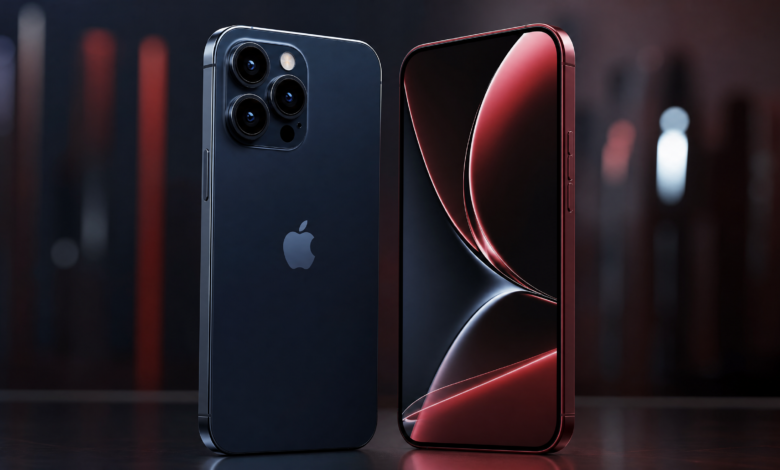
Apple’s 2026 flagship, the iPhone 18, promises a groundbreaking leap in AI integration, user experience, and sustainability. This lineup aims to redefine smartphone innovation with cutting-edge hardware and intelligence, making it the most ambitious iPhone series yet. As Apple intensifies its focus on AI and design, the iPhone 18 is poised to disrupt the market and set new standards for mobile technology.
Core Significance
- Advanced AI Capabilities: iPhone 18 integrates next-gen AI chips for instant on-device intelligence enhancing photography, security, and user customization.
- Design & Sustainability: A bold redesign with eco-friendly materials signals Apple’s commitment to environmental responsibility without compromising performance.
- Impact on Pakistan’s Technology Market: Local adoption of AI-enhanced smartphones could accelerate digital transformation and mobile AI usage in Pakistan.
- Competitive Benchmark: iPhone 18 sets a new bar for AI in smartphones amid rising competition from Android rivals investing heavily in AI tech.
- Future-Ready Features: Innovations like satellite connectivity and advanced AR support anticipate evolving consumer and geo-political needs.
Deep Context
Since the launch of the first iPhone in 2007, Apple has consistently pushed mobile technology boundaries, blending hardware innovation with software prowess. The past decade has seen incremental improvements, but the iPhone 18 represents a conceptual leap, focusing heavily on artificial intelligence — a pivotal shift given AI’s rising prominence in technology sectors globally.
Historically, Apple optimized AI for user privacy, with the A-series chips gradually incorporating Neural Engines designed for machine learning tasks. The iPhone 18’s new A26 Bionic chip reportedly features a 16-core Neural Processor, enabling complex AI operations directly on-device, minimizing latency and safeguarding personal data by limiting cloud dependency.
This push comes at a time when global smartphone markets are saturated, and consumers demand more personalized, intelligent experiences. Apple’s strategic pivot aligns with Pakistan’s rapid digital adoption and growing interest in AI applications across industries. The iPhone 18’s launch will likely invigorate local tech ecosystems by raising user expectations for AI-driven functionality.
Moreover, Apple’s emphasis on sustainability resonates with international climate commitments. For Pakistan — a country vulnerable to climate challenges — technology that prioritizes eco-conscious manufacturing could influence local smartphone procurement policies and inspire regional manufacturers to adopt greener practices.
iPhone Design Evolution and AI Integration
The iPhone 18 surfaces after a lineage of models that experimentally merged AI with hardware, including previous models’ offering of AI-assisted photography, health data analysis, and Siri improvements. Industry insiders reveal the iPhone 18’s interface integrates Adaptive AI that learns user habits to optimize battery management, notifications, and app behavior without compromising privacy.
Strategic Outlook
Looking ahead, Apple intends to leverage the iPhone 18 to expand its AI ecosystem, not only through hardware but by integrating services like enhanced Siri, on-device AI productivity tools, and personalized AR experiences. This will likely trigger a ripple effect with app developers focusing more on AI-driven applications, benefiting consumer and enterprise users alike.
For Pakistan, the arrival of the iPhone 18 may serve as a catalyst for the AI mobile revolution. As mobile usage dominates internet access across the country, AI-powered smartphones can enable smarter communication, financial inclusion, and education technology advancements, addressing socio-economic challenges.
Additionally, geostrategic developments hint at Apple incorporating satellite communication features in the iPhone 18, which could facilitate connectivity in remote or disaster-affected regions, a feature highly relevant for Pakistan’s rural and mountainous areas prone to infrastructural challenges.
Competitively, Apple’s aggressive AI and eco-sustainability focus may push rivals like Samsung and Google to expedite development of AI-centric devices, amplifying innovation industry-wide and potentially influencing pricing and accessibility in emerging markets.
AI Ethics and Privacy Considerations
Apple’s adherence to privacy remains a key strategic pillar, especially as AI processing shifts on-device. Experts point out that this approach sets Apple apart, ensuring that while AI capabilities expand, consumer data is protected — a significant concern in Pakistan’s growing digital economy where data regulations are evolving.
Data Insights
- Processor Advancements: The A26 Bionic chip reportedly delivers 40% faster AI processing compared to its predecessor, enabling real-time AI tasks without draining battery.
- AI Adoption Trends: Global smartphone AI feature utilization increased 65% from 2022 to 2025, according to IDC’s latest report (IDC 2025 AI in Mobile Report).
- Environmental Impact: Apple’s carbon-neutral goal includes 75% recycled materials in the iPhone 18’s chassis, up from 45% in the iPhone 15 lineup (Apple Environment Report 2025).
- Market Penetration: Pakistan’s smartphone penetration stands at 85% as of 2024, with AI-enabled device adoption expected to grow by 20% annually (Pakistan Bureau of Statistics).
- Satellite Connectivity: iPhone 18’s satellite emergency feature offers global reach in networks with limited cellular infrastructure — a breakthrough for remote Pakistani regions (GSMA Report on Connectivity).
Infographic: iPhone 18 AI & Sustainability Highlights
[Featured infographic here comparing AI chip speeds, battery optimization percentages, recycled material usage, and predicted market adoption in Pakistan & globally.]
Expert Nuance
Industry analysts note that the iPhone 18’s on-device AI approach reflects Apple’s commitment to balancing power and privacy, a strategy that could influence global AI governance frameworks. By reducing reliance on cloud processing, Apple addresses latency and data sovereignty issues, crucial for countries like Pakistan navigating complex data privacy laws.
Moreover, Apple’s integration of satellite communication hints at a dual focus on innovation and geopolitical resilience. For a nation like Pakistan, where geopolitical tensions and natural disasters can disrupt connectivity, such features could be transformative for emergency communication and national security.
However, experts caution that premium pricing might limit initial accessibility in price-sensitive markets. The challenge for Apple will be balancing innovation with affordability, especially to capture the expansive South Asian user base eager for AI-driven experiences.
Finally, local developers in Pakistan are positioned to benefit significantly from Apple’s expanded AI toolkits, potentially sparking a surge in localized AI applications that cater to regional languages and cultural contexts, driving deeper AI integration across the Pakistani economy.
For continued updates on Apple’s innovation journey and Pakistan’s evolving tech landscape, stay tuned to The Brief Script.